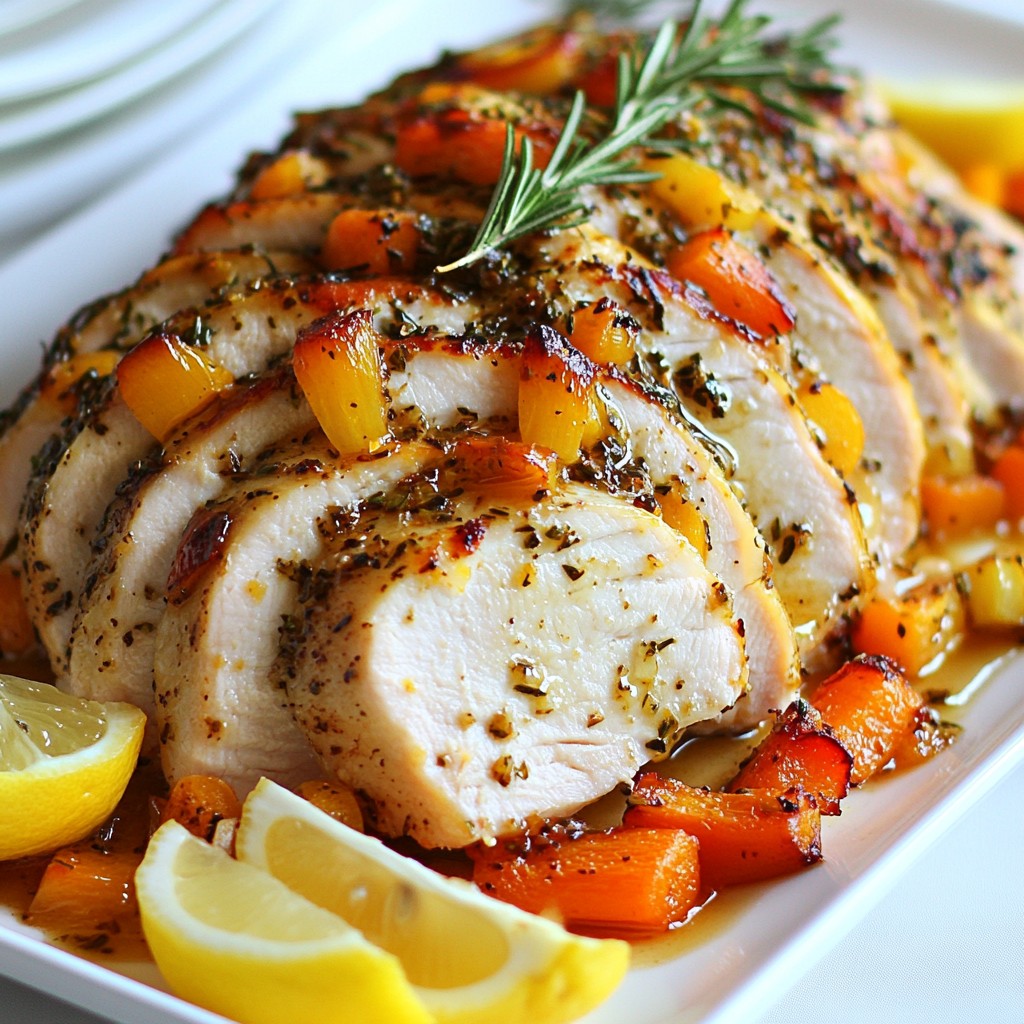
Get ready to elevate your meal with my Garlic Herb Roasted Turkey Breast! This dish bursts with flavor from fresh herbs, garlic, and a hint of lemon. Whether you're cooking for a special occasion or a cozy dinner, this easy recipe promises juicy and tender turkey that everyone will love. Join me as I guide you through each step, from preparation to serving, and discover tips to make your turkey shine!
Why I Love This Recipe
- Flavorful Herb Blend: The combination of garlic, rosemary, and thyme creates a mouthwatering aroma and depth of flavor that perfectly complements the turkey.
- Easy Preparation: This recipe requires minimal effort, allowing you to enjoy a delicious homemade meal without spending hours in the kitchen.
- Moist and Juicy: Basting the turkey with pan juices ensures a moist and tender result, making each slice a delight to eat.
- Beautiful Presentation: The vibrant colors of the roasted vegetables and fresh herbs make for an impressive and inviting dish at any gathering.
Ingredients
Main Ingredients
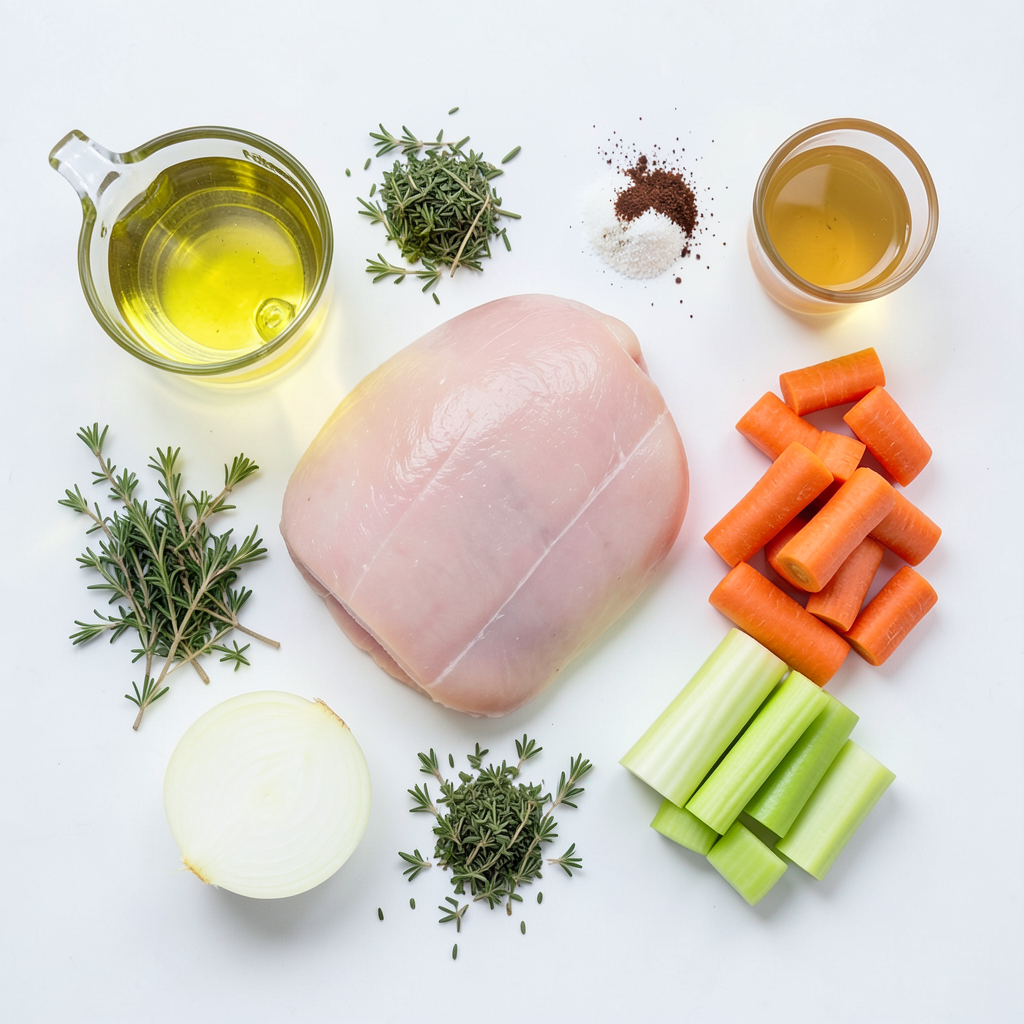
- 1 boneless turkey breast (3 to 4 pounds)
- 4 cloves of garlic, minced
- 2 tablespoons fresh rosemary, finely chopped
- 2 tablespoons fresh thyme, finely chopped
- 3 tablespoons olive oil
- 1 tablespoon lemon juice
To create a flavorful garlic herb roasted turkey breast, you need a few key ingredients. First, the star is the boneless turkey breast, weighing around 3 to 4 pounds. This size makes it perfect for a family meal. The garlic gives the turkey its rich taste. Fresh herbs like rosemary and thyme add depth and aroma. Olive oil and lemon juice not only help keep the turkey moist, but they also enhance the flavor.
Vegetables and Broth
- 1 onion, quartered
- 2 carrots, chopped
- 2 stalks of celery, chopped
- 1 cup chicken broth
Next, we add vegetables. Onions, carrots, and celery create a tasty bed for the turkey. These veggies soak up the turkey's juices while roasting. They make a great side dish. Chicken broth adds moisture and flavor, ensuring your turkey stays juicy and tender.
Seasonings
- Salt, pepper, and paprika
Lastly, seasonings bring out the best in your turkey. Salt and pepper add basic flavor, while paprika gives it a lovely color and a hint of spice. The right balance of these seasonings makes your turkey breast not just good, but great!
This combination of ingredients creates a dish that’s juicy, flavorful, and sure to impress. Each element works together to elevate your meal, making it a delightful experience for everyone at your table!
Step-by-Step Instructions
Preparation Steps
- Preheating the Oven
Start by preheating your oven to 325°F (160°C). This helps the turkey cook evenly.
- Making the Herb Paste
In a small bowl, mix together 4 cloves of minced garlic, 2 tablespoons of finely chopped rosemary, and 2 tablespoons of finely chopped thyme. Add 3 tablespoons of olive oil, 1 tablespoon of lemon juice, and season with salt, pepper, and 1 teaspoon of paprika. Stir well to combine. This paste will give your turkey a burst of flavor.
Turkey Preparation
- Preparing the Turkey Breast
Pat the boneless turkey breast dry with paper towels. This step is key for crispy skin. Carefully loosen the skin from the meat by sliding your fingers between them. Be gentle to avoid tearing the skin.
- Applying the Herb Paste
Spread half of the herb paste under the skin directly on the turkey meat. Then, take the remaining paste and spread it evenly over the skin. This ensures that every bite is packed with flavor.
Roasting Process
- Creating a Vegetable Bed
In a roasting pan, place quartered onion, chopped carrots, and chopped celery at the bottom. These vegetables will add flavor and moisture to the turkey. Pour 1 cup of chicken broth into the pan for extra juiciness.
- Roasting and Basting the Turkey
Place the prepared turkey breast on top of the vegetable bed. Roast in your preheated oven for about 1.5 to 2 hours. Check that the internal temperature reaches 165°F (75°C). Baste the turkey with the pan juices every 30 minutes. This keeps the turkey moist and enhances its flavor.
Once cooked, let the turkey rest for 15-20 minutes before slicing. This step helps the juices to settle, making it more delicious. Enjoy your flavorful garlic herb roasted turkey breast!
Tips & Tricks
Cooking Tips
- Ensuring Moisture and Flavor
To keep your turkey juicy, always baste it. Every 30 minutes, use the pan juices to moisten the turkey. This adds flavor and helps the meat stay moist. Additionally, make sure to let the turkey rest after cooking. This step allows the juices to settle, making every slice tasty.
- Using a Meat Thermometer
A meat thermometer is key for perfect turkey. Insert it into the thickest part of the breast. You want the temperature to reach 165°F (75°C). This ensures the turkey is safe to eat and cooked just right. No more guesswork!
Presentation Tips
- Serving Suggestions for Visual Appeal
After slicing, arrange the turkey on a large platter. Place the roasted veggies around the turkey for color. This makes your meal look great and ready for guests. You can also serve it with lemon wedges for a fresh touch.
- Garnishing Techniques with Fresh Herbs
Use fresh herbs to make your dish pop. Sprinkle chopped rosemary and thyme over the turkey. This not only adds color but also enhances the aroma. A simple garnish can make a big difference in how your meal looks.
Leftover Turkey Ideas
- Creative Ways to Use Leftover Turkey Breast
Leftover turkey is a treasure! Use it in sandwiches, salads, or soups. Chop it up for a turkey salad with mayo, celery, and grapes. You can also make a turkey soup with broth and leftover veggies. The options are endless and so tasty!
Pro Tips
- Resting is Key: Allow the turkey to rest after roasting. This helps the juices redistribute, ensuring moist slices.
- Use a Meat Thermometer: To avoid overcooking, use a meat thermometer to check for doneness. Aim for an internal temperature of 165°F (75°C).
- Flavor Infusion: For extra flavor, marinate the turkey breast in the herb paste for a few hours or overnight before roasting.
- Save the Drippings: Don’t discard the pan drippings! They can be used to make a delicious gravy or sauce to accompany the turkey.
Variations
Flavor Variations
Alternative Herb Combinations You can change the herbs for a new taste. Try using sage or basil instead of rosemary and thyme. Each herb brings its own flavor. You can also mix in some parsley or oregano for added depth. This helps keep meals fresh and exciting.
Incorporating Citrus Flavors Adding citrus can brighten your turkey. Try using orange or lime juice in place of lemon juice. You can also zest the fruit to add more flavor. This gives the turkey a fresh twist and makes it stand out on the table.
Different Cooking Methods
Slow Cooker Version Want a hands-off meal? Use a slow cooker. Season the turkey as usual, then place it in the slow cooker with the veggies and broth. Cook on low for 6 to 8 hours. The turkey will be tender and juicy, perfect for busy days.
Grill or Smoker Adaptation For a smoky flavor, use a grill or smoker. Prepare the turkey with the herb paste and let it marinate. Then, grill it over indirect heat. Aim for a temperature of 165°F (75°C). This method adds a delicious char and is great for summer gatherings.
Storage Info
Storing Leftovers
- Proper Cooling and Refrigeration Techniques
After you finish your meal, let the turkey cool at room temperature for no more than two hours. This helps keep it safe to eat. Once cooled, place the turkey in an airtight container. Wrap it tightly in plastic wrap or aluminum foil for extra protection.
- Recommended Storage Timeframes
You can keep leftovers in the fridge for up to four days. If you want to store them longer, freeze the turkey. It will stay fresh in the freezer for up to six months. Just make sure to label your containers with the date.
Reheating Tips
- Best Methods for Reheating Turkey
The best way to reheat turkey is in the oven. Preheat your oven to 325°F (160°C). Place the turkey in a baking dish and cover it with foil. Heat it for about 20-30 minutes, or until the internal temperature reaches 165°F (75°C). For a quick option, you can use the microwave. Just heat in short bursts, checking often.
- Keeping Moisture When Reheating
To avoid dry turkey, add a splash of chicken broth or water to the dish before reheating. Covering it with foil also helps keep the moisture in. If you use the microwave, cover the dish with a microwave-safe lid or wrap to keep it moist.
FAQs
Common Questions
How long do I cook a turkey breast per pound? You cook a turkey breast for about 20 minutes per pound. This ensures it cooks evenly. For example, a 4-pound turkey breast takes around 1.5 hours. Always check the internal temperature, aiming for 165°F. This way, you will ensure it is safe to eat and juicy.
Can I make this recipe with skin-on turkey breast? Yes, you can use a skin-on turkey breast. The skin adds flavor and helps keep the meat moist. Just loosen the skin and apply the herb paste underneath, as usual. This method will give you a crispy, flavorful skin while keeping the meat tender.
Nutritional Information
How many calories are in garlic herb roasted turkey breast? Garlic herb roasted turkey breast has about 200 calories per 3-ounce serving. This number may change based on added oils or sides. Turkey is a good source of lean protein, making it a healthy option for meals.
What are the health benefits of using herbs? Using herbs like rosemary and thyme adds flavor without extra calories. They also offer health benefits. Herbs contain antioxidants and may support digestion. Plus, they can enhance the taste of your dishes, making healthy eating more enjoyable.
Ingredient Substitutions
Can I use dried herbs instead of fresh? Yes, you can use dried herbs if fresh ones aren’t available. Generally, use one-third the amount of dried herbs as fresh. Dried herbs are more concentrated, so a smaller amount works well. Just mix them with the olive oil and lemon juice for the paste.
Alternatives to chicken broth for flavor? If you need an alternative to chicken broth, try vegetable broth. It offers a similar flavor profile. You can also use water mixed with a little soy sauce or Worcestershire sauce for added depth. These options will keep your dish tasty and flavorful.
This blog post covered how to make a great garlic herb roasted turkey breast. We discussed the key ingredients, from the turkey and herb paste to the veggies and broth. You learned step-by-step instructions and got tips for cooking, serving, and using leftovers.
Whether you want to try different flavors or cooking methods, you can customize this dish. With proper storage and reheating, your turkey will stay tasty for days. I hope these ideas inspire you to make a delicious meal for family and friends. Enjoy your cooking adventure!