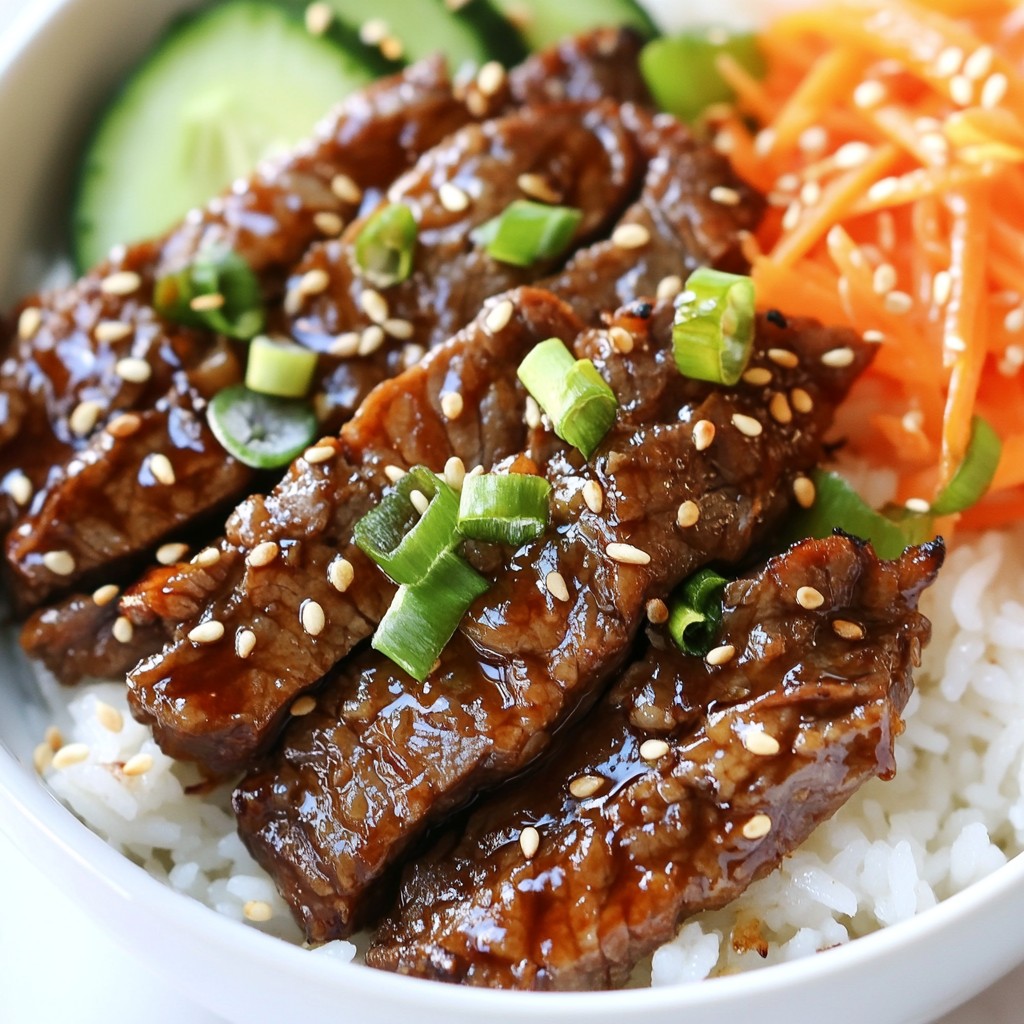
Dive into the world of Korean Beef Bulgogi Bowls! This flavorful dish is not only satisfying but also easy to make at home. You’ll love the juicy flank steak marinated in a sweet and savory sauce, topped with fresh veggies and served over fluffy rice. Whether you're a fan of Korean cuisine or a curious newbie, this guide will make cooking a breeze. Let’s get started on a meal you won't forget!
Why I Love This Recipe
- Bold Flavors: This recipe combines savory, sweet, and spicy elements that create a delightful burst of flavor in every bite.
- Quick and Easy: With a total prep and cook time of just 40 minutes, this dish is perfect for a weeknight dinner.
- Customizable: You can easily modify the toppings and sides to suit your taste preferences or dietary needs.
- Family-Friendly: This dish appeals to both kids and adults, making it a great option for family meals.
Ingredients
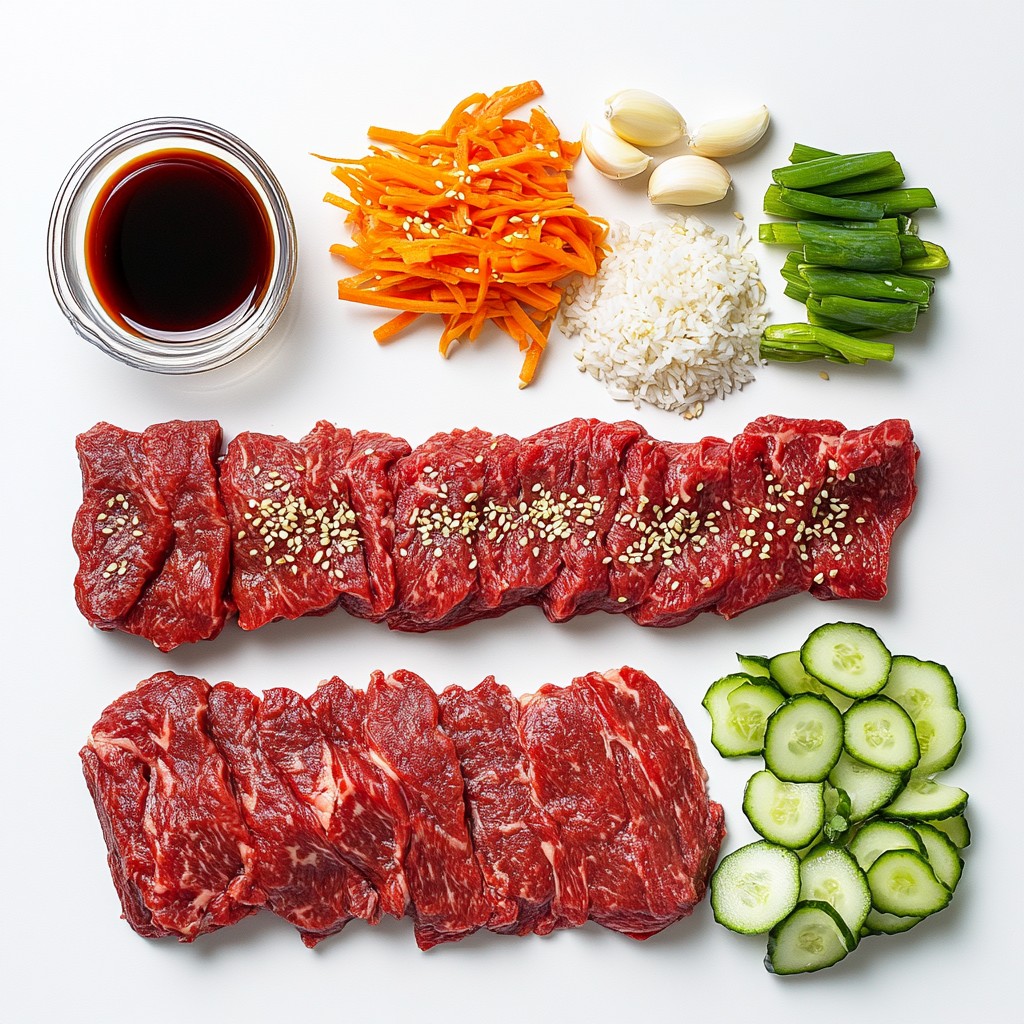
Main Ingredients for Korean Beef Bulgogi Bowls
- 1 lb (450g) flank steak, thinly sliced
- 1/4 cup soy sauce
- 2 tablespoons brown sugar
- 2 tablespoons sesame oil
- 3 cloves garlic, minced
- 1 tablespoon fresh ginger, grated
- 1 teaspoon gochujang (Korean chili paste)
Flank steak is the star of this dish. It is tender and perfect for marinating. The marinade mixes soy sauce and brown sugar to create a sweet and salty flavor. Garlic and ginger add depth, while gochujang gives it a spicy kick. This combination makes the beef deliciously savory.
Vegetables and Garnishes
- 1 cup cooked jasmine rice
- 1 cup shredded carrots
- 1 cup cucumber, thinly sliced
- 1/4 cup green onions, chopped
- 1 tablespoon sesame seeds
- Optional: Kimchi for serving
The veggies make the dish colorful and fresh. Shredded carrots and cucumber add crunch. Green onions and sesame seeds bring brightness and texture. Kimchi is a great side for extra flavor.
Cooking Essentials
- 2 tablespoons sesame oil
- 1 cup cooked jasmine rice
- Large skillet or grill pan
You need sesame oil for the beef and to add rich flavor. Cooked jasmine rice serves as a base for the bowl. A large skillet or grill pan is essential for searing the beef. These tools help create a tasty meal in no time.
Step-by-Step Instructions
Preparing the Marinade
To make the marinade, start by mixing these ingredients in a bowl:
- 1/4 cup soy sauce
- 2 tablespoons brown sugar
- 2 tablespoons sesame oil
- 3 cloves garlic, minced
- 1 tablespoon fresh ginger, grated
- 1 teaspoon gochujang
Mix well until the sugar dissolves. This mix gives a sweet and salty flavor. Then, add the thinly sliced flank steak. Ensure every piece is coated. Cover the bowl and let it rest in the fridge for at least 30 minutes. For more flavor, marinate for up to 2 hours. This step is key. It allows the beef to absorb all those tasty flavors.
Cooking the Beef
Next, heat a large skillet or grill pan over medium-high heat. Wait until it is hot. Add the marinated beef in a single layer. If your pan is small, cook in batches. Sear the beef for about 2-3 minutes on each side. You want it cooked through and slightly caramelized. This gives the beef a nice crust. It also keeps it tender inside. Avoid overcooking; no one likes tough beef!
Assembling the Bowls
Now, it's time to build your bowls. Start by dividing the cooked jasmine rice among serving bowls. I like to use about 1 cup per bowl. Next, top the rice with the cooked bulgogi beef. Then, add shredded carrots and thinly sliced cucumbers. They add crunch and color. Finally, sprinkle sesame seeds and chopped green onions on top. This not only looks great but also adds extra flavor. Serve your bowls immediately. For an authentic touch, add kimchi on the side. Enjoy your delicious Korean Beef Bulgogi Bowls!
Tips & Tricks
Perfecting the Marinade
For the best flavor, marinate the beef for at least 30 minutes. If you have time, go for 2 hours. This lets the meat soak up all the tasty juices. If you want to mix things up, try adding a splash of orange juice for sweetness or a bit of sesame seeds for crunch.
Cooking Techniques
When searing beef, heat your skillet well. This helps get a nice crust. Cook the beef in batches to avoid steaming. If you don’t have a skillet, you can use a grill pan or even an outdoor grill. Both methods work well to give the beef great flavor.
Serving Enhancements
For sides, think about adding steamed broccoli or pickled radishes. These add freshness and texture. You can serve this dish with kimchi for an authentic touch. To make it a full meal, add some fresh fruit, like sliced oranges or apples, on the side. This adds a nice balance to the savory flavors.
Pro Tips
- Marinate Longer for More Flavor: Letting the beef marinate for up to 2 hours will enhance the flavors and make the meat more tender.
- Thinly Slice the Beef: For the best texture, slice the flank steak against the grain and as thin as possible. This ensures a tender bite.
- High Heat for Searing: Use high heat when cooking the beef to achieve a nice caramelization, which adds depth to the flavor.
- Customize Your Veggies: Feel free to add other vegetables like bell peppers or snap peas for a colorful and nutritious twist to your bowls.
Variations
Ingredient Swaps
You can change the type of meat for bulgogi. Try using sirloin or ribeye for more flavor. If you want a lighter option, use chicken or pork. You can even go fully plant-based! Tofu or tempeh makes great vegan substitutes. Just marinate them like the beef.
Flavor Variations
Adjust the spice level to match your taste. Add more gochujang for heat, or use less for a milder dish. You can also mix in other seasonings, like red pepper flakes, if you like it hot. For a different sauce, blend soy sauce with honey or miso for a sweet twist.
Regional Variations
Korean cuisine has many local twists on bulgogi. In Jeolla Province, they use more vegetables in their version. In Seoul, it's common to add fruits like pear for sweetness. Customize your dish by adding your favorite veggies or spices. Make it personal, and enjoy every bite!
Storage Info
Refrigeration Techniques
To keep your Korean beef bulgogi fresh, store leftovers in an airtight container. This helps avoid any odors from the fridge. Place the beef in the container separately from the rice and vegetables. This keeps everything crisp and tasty. When stored properly, your bulgogi will last about 3 to 4 days in the fridge.
Freezing and Reheating
If you want to save bulgogi for later, freezing is a great option. Place the cooled beef in a freezer-safe bag. Squeeze out as much air as you can before sealing it. This helps prevent freezer burn. You can freeze it for up to 3 months. When you're ready to eat, thaw it in the fridge overnight. To reheat, use a skillet over medium heat. This method keeps the beef juicy and flavorful. You can also add a splash of water to help steam the meat for extra moisture.
Meal Prep Ideas
Bulgogi is perfect for meal prep! You can make a big batch and use it throughout the week. Serve it with rice and veggies for a quick lunch. You can also add it to wraps or salads for a different twist. If you have leftover bulgogi, try making a stir-fry. Just toss it with some fresh veggies and a bit of soy sauce. This way, you can enjoy a new meal without much effort.
FAQs
What is bulgogi?
Bulgogi is a popular Korean dish made from marinated beef. The thin slices of beef soak in a mix of soy sauce, sugar, and spices. This gives bulgogi a sweet and savory flavor. It is often grilled or stir-fried, which adds a nice caramelization. Bulgogi is a staple in Korean cuisine and is loved for its rich taste and tender texture. It often serves as a main dish in meals, bringing families together around the table.
Can I use a different protein for this recipe?
Yes, you can use other proteins for bulgogi bowls. Chicken, pork, or tofu are great options. For chicken, use thinly sliced breast or thighs, marinated just like the beef. For pork, tender cuts like loin work well. If you prefer a plant-based choice, firm tofu can absorb the marinade well. Marinate the protein the same way, and enjoy a tasty twist on the classic dish.
How can I make this recipe gluten-free?
To make bulgogi gluten-free, simply swap the regular soy sauce for tamari. Tamari is a gluten-free soy sauce alternative. You can also check labels for gluten-free gochujang. Using fresh vegetables and a gluten-free rice option will keep the meal safe and delicious. Enjoy your bulgogi bowls without worry while keeping the same great flavor!
Korean Beef Bulgogi Bowls are easy to make and full of flavor. We covered key ingredients, including flank steak and marinade basics. Cooking tips ensure your beef stays tender. You learned how to serve and store your bowls for later. Whether you swap ingredients or customize flavors, these bowls can fit your taste. Enjoy the process and make this dish your own. Cooking these bowls is fun and rewarding!