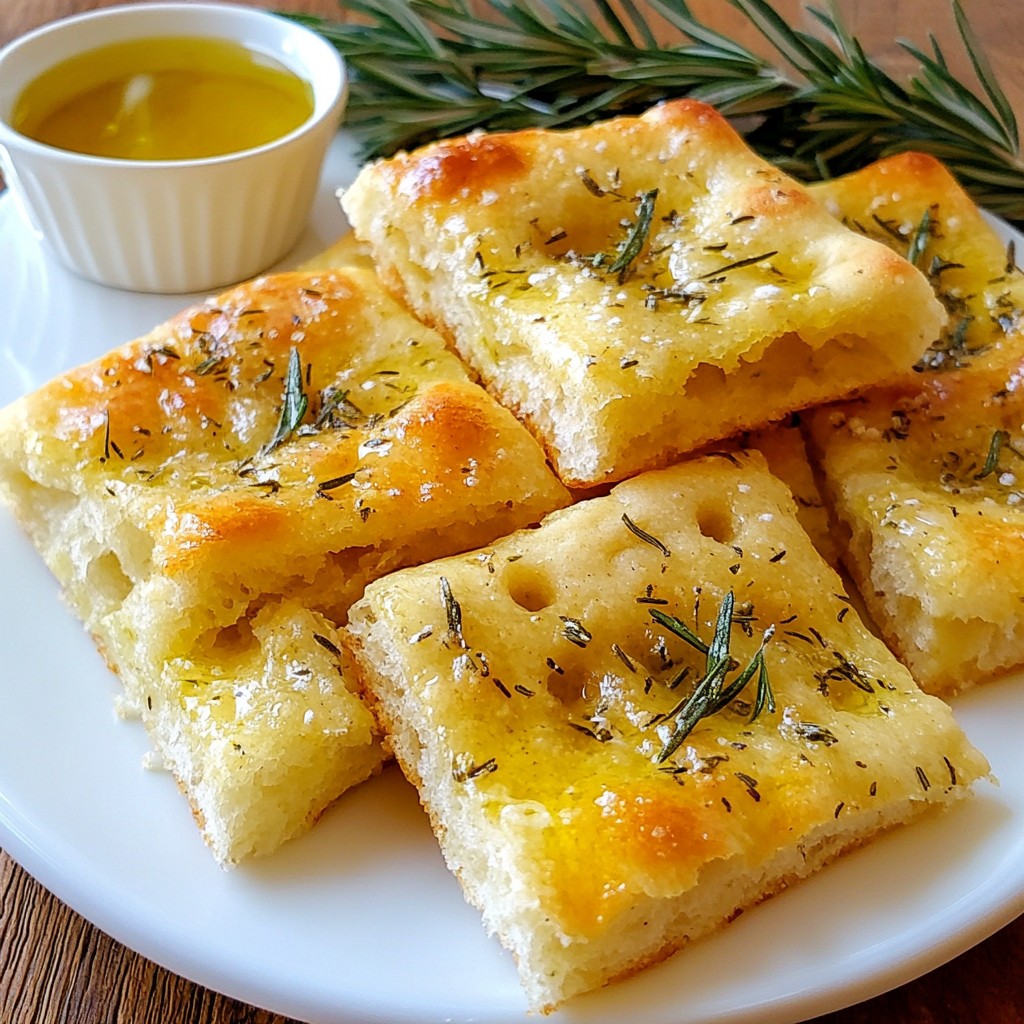
If you crave warm, savory bread that delights your senses, you're in the right place. This Rustic Rosemary Focaccia Bread is not only simple to make, but also bursting with flavor. In this post, I’ll guide you through each step—from picking fresh rosemary to perfecting the baking process. Whether you're a seasoned baker or a beginner, I promise you will impress your friends and family with this tasty treat!
Why I Love This Recipe
- Fresh and Flavorful: This focaccia is infused with fresh rosemary, giving it a delightful aroma and flavor that makes it irresistible.
- Easy to Make: The step-by-step instructions make it simple for even novice bakers to achieve bakery-quality bread at home.
- Versatile: It can be served as an appetizer, side dish, or even as a base for sandwiches, making it perfect for any meal.
- Perfectly Textured: The dimples create a lovely texture that captures olive oil and seasoning, ensuring every bite is full of flavor.
Ingredients
List of Essential Ingredients
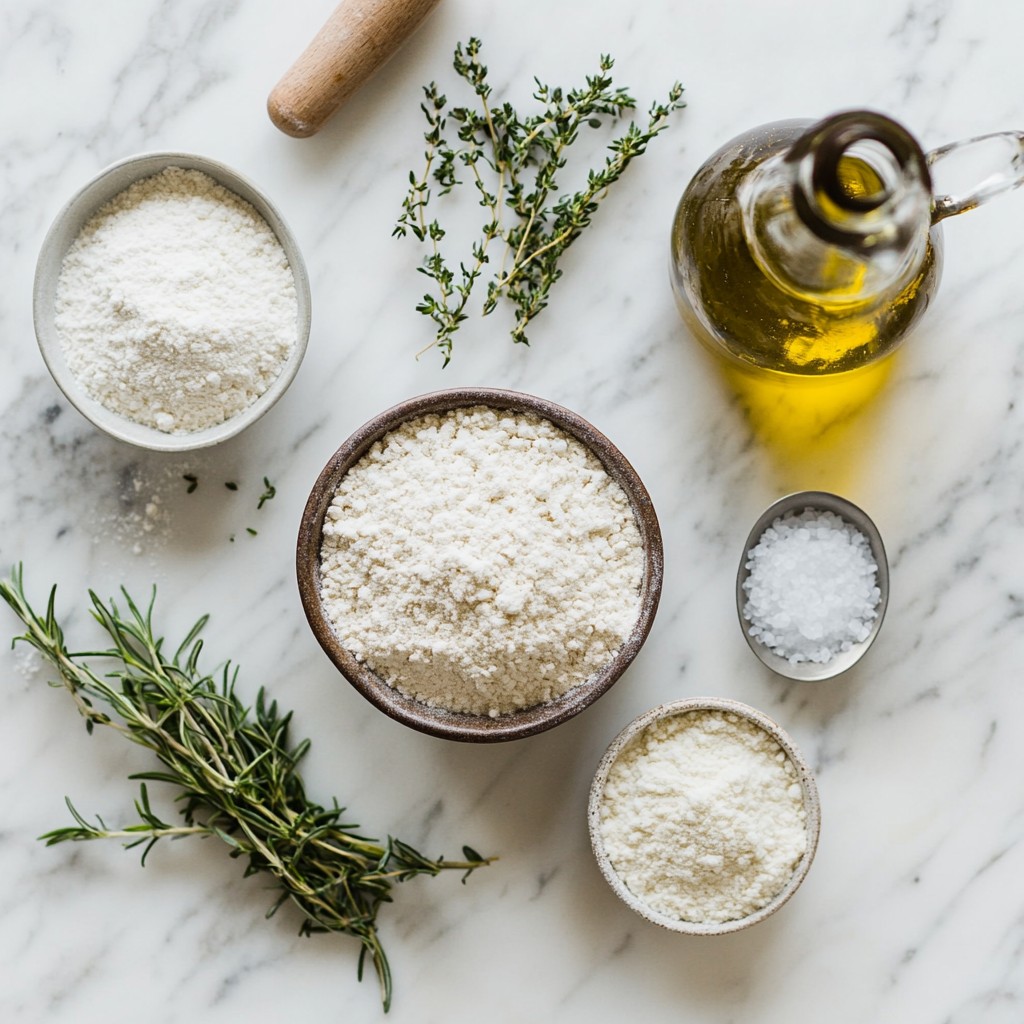
To make a great rustic rosemary focaccia bread, gather these key ingredients:
- 4 cups all-purpose flour
- 2 teaspoons salt
- 1 tablespoon sugar
- 2 teaspoons active dry yeast
- 1 ¾ cups warm water (110°F)
- ¼ cup olive oil (plus extra for drizzling)
- 2 tablespoons fresh rosemary, chopped (plus extra for garnish)
- Coarse sea salt for sprinkling
Each ingredient plays a vital role. The flour provides structure. Yeast adds air and fluff. Olive oil gives flavor and moisture.
Tips for Choosing Fresh Rosemary
When you pick rosemary, look for bright green leaves. The leaves should feel soft but firm. Fresh rosemary has a strong, pleasant scent. Avoid any sprigs that look wilted or dry.
To keep rosemary fresh, store it in the fridge. You can wrap it in a damp paper towel. Place it in a plastic bag. This will help it last longer.
Optional Ingredients for Custom Flavor
You can mix in other ingredients to change the flavor. Try adding:
- Garlic cloves, minced
- Cherry tomatoes, halved
- Olives, chopped
- Cheese, like feta or parmesan
These additions can make your focaccia even more special. Experiment to find your favorite combination.
Step-by-Step Instructions
Activating the Yeast
To start, you need to activate the yeast. In a small bowl, combine 1 ¾ cups of warm water, 1 tablespoon of sugar, and 2 teaspoons of active dry yeast. Stir gently and let it sit for about 10 minutes. You will know it is ready when it looks frothy. This step wakes up the yeast, making it ready to help your bread rise.
Mixing and Kneading the Dough
Next, take a large mixing bowl and add 4 cups of all-purpose flour and 2 teaspoons of salt. Mix these dry ingredients well. Make a well in the center of the flour and pour in your activated yeast mixture and ¼ cup of olive oil. Use a spoon or your hands to mix until you form a shaggy dough. After that, transfer the dough onto a floured surface and knead for about 5 to 7 minutes. You want it to feel smooth and elastic. This step develops gluten, which gives your focaccia its chewy texture.
Rising Times and Techniques
Once your dough is kneaded, it’s time for the first rise. Place the dough into a lightly greased bowl. Cover it with a clean cloth and let it rise in a warm spot for 1 to 2 hours. You want it to double in size. This rising time allows the yeast to work, making your focaccia light and airy. After the first rise, punch the dough down to release the air. Shape it on a greased baking sheet and create dimples with your fingers. Let it rise again for 30 to 45 minutes before baking. This second rise enhances the texture and flavor of your focaccia.
Tips & Tricks
How to Achieve Perfect Texture
To get the right texture in your focaccia, focus on the kneading stage. Knead the dough for about 5-7 minutes. This builds gluten, which helps create a chewy and airy bread. When you stretch the dough, it should bounce back slightly. This means it’s ready for the first rise. Use warm water, around 110°F, to activate the yeast well. This helps the dough rise nicely.
Common Mistakes to Avoid
One common mistake is not letting the dough rise enough. Make sure it doubles in size during the first rise. Another mistake is using cold water for the yeast. This can slow down or stop the yeast from working. Avoid overworking the dough after the second rise. This can make your focaccia dense rather than fluffy. Lastly, don’t skip the dimples! They help hold the olive oil and flavor.
Best Practices for Flavor Enhancement
Fresh rosemary brings a great taste, so use it generously. Add some coarse sea salt on top for extra flavor. You can also drizzle a bit more olive oil before baking. This adds moisture and richness. For more flavor, consider mixing in garlic or other herbs like thyme or oregano. These can give your focaccia unique twists. Enjoy experimenting with toppings, but keep the balance of flavors in mind!
Pro Tips
- Use Fresh Rosemary: Fresh rosemary gives the focaccia a more vibrant flavor compared to dried. Make sure to use it for the best results!
- Perfect Dimpling Technique: When creating the dimples, press down firmly but gently to ensure they hold the olive oil and seasonings without tearing the dough.
- Check Oven Temperature: Ensure your oven is properly preheated to 425°F (220°C) for even baking. An oven thermometer can help you confirm the temperature.
- Enjoy it Warm: Focaccia is best enjoyed fresh and warm. Serve it right out of the oven for a delightful texture and flavor experience.
Variations
Herb Variations for Focaccia
You can change the flavor of your focaccia by adding different herbs. Try using thyme, basil, or oregano. Each herb gives a unique taste. Just chop a tablespoon of your chosen herb and mix it into the dough. This makes your focaccia special and exciting.
Adding Toppings (Olives, Tomatoes, etc.)
Toppings can make focaccia even more delicious. You can add olives, cherry tomatoes, or even cheese. For olives, use pitted kalamata or green olives. Halve them and sprinkle them on top. For tomatoes, cut them in half and press them into the dough. Cheese lovers can add mozzarella or feta. Just place small pieces on top. These toppings add color and flavor.
Gluten-Free Option
If you need a gluten-free option, you can use gluten-free flour. Many brands work well for this. Just follow the same steps as the main recipe. Make sure to check for a gluten-free yeast to ensure it rises properly. This way, everyone can enjoy warm focaccia bread.
Storage Info
How to Store Leftover Focaccia
To store leftover focaccia, let it cool completely first. Once cool, wrap it tightly in plastic wrap or place it in an airtight container. This keeps the bread fresh and soft. You can store it at room temperature for up to 2 days. If you want to keep it longer, the fridge can dry it out, so it’s best to use other methods.
Freezing Instructions
If you want to freeze focaccia, slice it first. Wrap each slice in plastic wrap, then place them in a freezer bag. This method helps keep the slices fresh. You can freeze focaccia for up to 3 months. When you’re ready to enjoy it, you can remove the slices and let them thaw at room temperature.
Reheating Tips
To reheat focaccia, preheat your oven to 350°F (175°C). Place the focaccia directly on the oven rack or a baking sheet. Heat for about 10 minutes, or until warm. If you want a crispy crust, you can drizzle a bit of olive oil on top before reheating. Enjoy your focaccia warm, with its lovely aroma filling your kitchen!
FAQs
What Is the Best Way to Serve Focaccia?
I love to serve focaccia warm. Cut it into big squares. Place it on a wooden board. Add fresh rosemary on top for a pop of color. You can serve it with a small bowl of olive oil for dipping. This makes it fun and tasty. It pairs well with soups or salads too. You can even use it as a sandwich base. The options are endless!
How Long Does Focaccia Last?
Focaccia stays fresh for about 2-3 days at room temperature. Make sure you wrap it well in plastic wrap or foil. This keeps it soft and moist. If you want it to last longer, store it in the fridge. It can last up to a week there. For the best taste, I suggest eating it fresh.
Can I Use Instant Yeast Instead of Active Dry Yeast?
Yes, you can use instant yeast! It works well and can save time. You don’t need to activate it first like active dry yeast. Just mix it directly into your dry ingredients. However, keep in mind that the rise time might be a bit shorter. Always check your dough to see if it's doubled in size.
To make great focaccia, start with fresh ingredients like rosemary and choose your toppings wisely. I covered how to activate yeast, knead dough, and rise it properly. You learned tips to achieve the perfect texture and avoid common mistakes. Explore tasty variations and storage tips for leftover bread. Focaccia brings joy to any meal. Embrace your creativity and enjoy every bite!