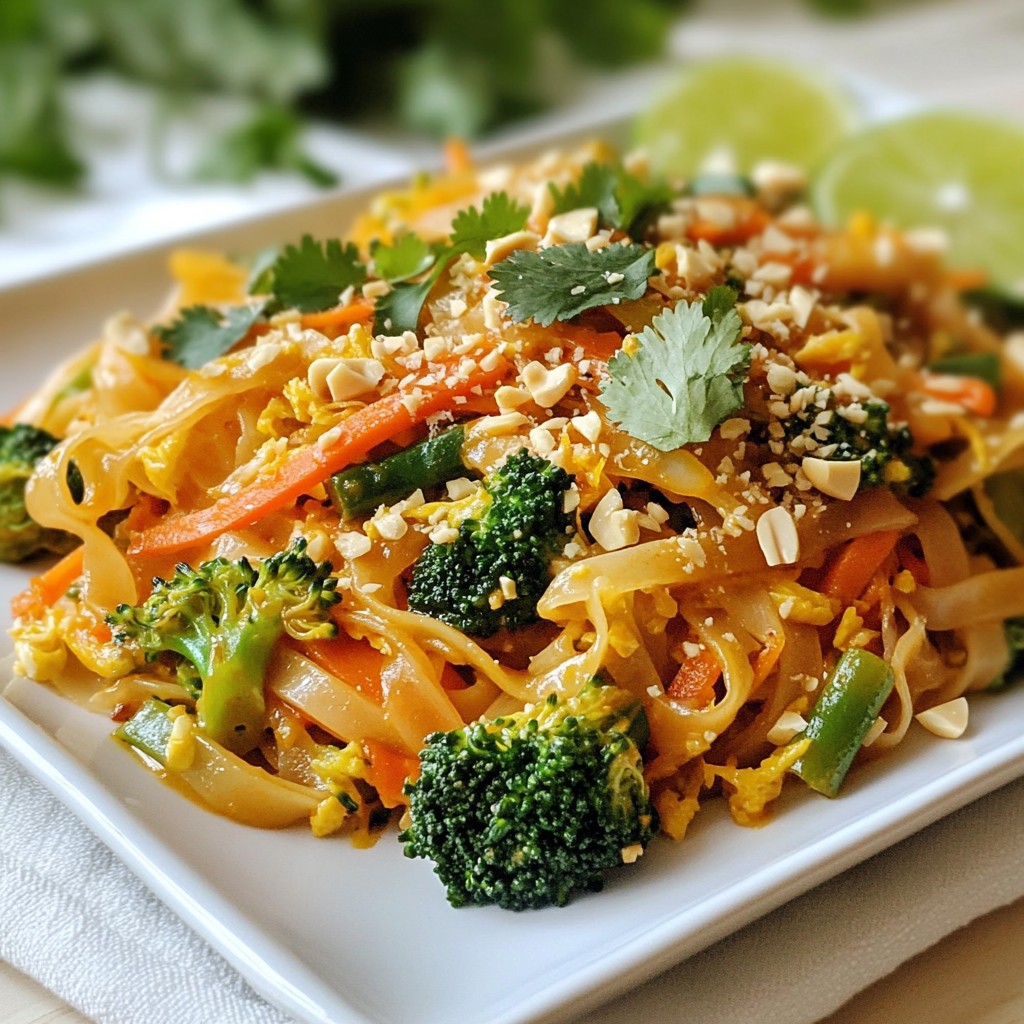
Ready to whip up a delicious Veggie Pad Thai? With its bold flavors and crunchy veggies, this dish is a crowd-pleaser! I’ll guide you through each step, from selecting the right ingredients to tips for making it perfectly. Whether you’re a seasoned chef or a kitchen newbie, this easy recipe will have you enjoying a homemade Pad Thai in no time. Let’s dive into the fresh, vibrant world of Veggie Pad Thai!
Why I Love This Recipe
- Quick and Easy: This Veggie Pad Thai comes together in just 25 minutes, making it a perfect weeknight meal for busy schedules.
- Customizable Veggies: The recipe allows you to use any vegetables you have on hand, making it great for cleaning out the fridge.
- Deliciously Flavorful: The combination of soy sauce, tamarind paste, and lime juice creates a vibrant and tangy sauce that elevates the dish.
- Healthy and Nutritious: Packed with fresh vegetables and topped with crunchy peanuts, this dish is both satisfying and nourishing.
Ingredients
Main Ingredients for Veggie Pad Thai
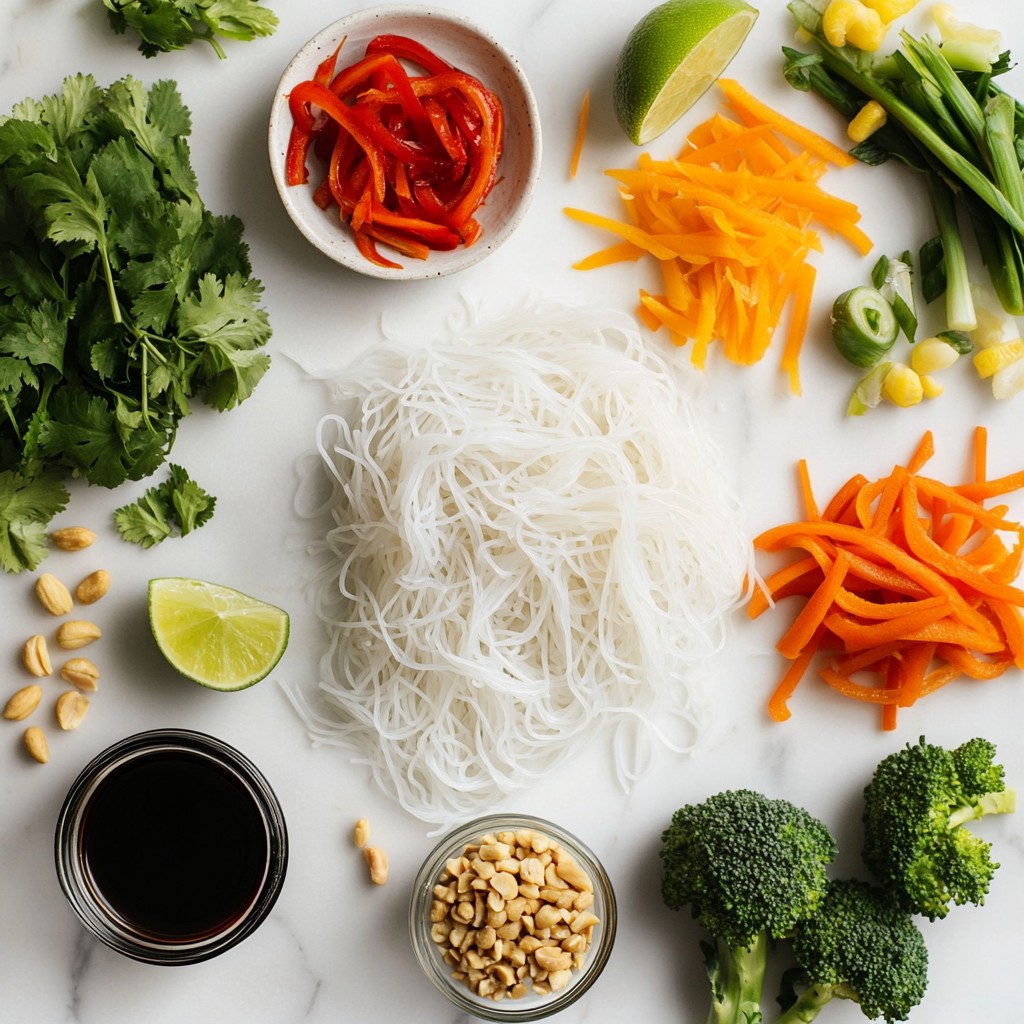
- 8 oz rice noodles
- 1 tablespoon vegetable oil
- 2 cloves garlic, minced
- 1 cup shredded carrots
- 1 bell pepper, sliced (red or yellow for sweetness)
- 1 cup broccoli florets
- 1 cup bean sprouts
- 2 green onions, sliced
Veggie Pad Thai starts with rice noodles. These noodles soak in hot water. This makes them soft and ready to mix with veggies. I like using carrots for crunch. Bell peppers add sweetness and color. Broccoli florets are a must for texture. Bean sprouts give a fresh taste, and green onions add brightness.
Essential Seasonings and Sauces
- 2 tablespoons soy sauce
- 1 tablespoon tamarind paste
- 1 tablespoon sugar (preferably coconut sugar)
- 1 tablespoon lime juice
For flavor, we need soy sauce. It gives a salty taste that balances the dish. Tamarind paste adds a tangy kick. I prefer coconut sugar for sweetness. It makes the sauce rich. Lime juice brightens everything up, giving it freshness.
Optional Toppings and Garnishes
- Crushed peanuts for topping
- Fresh cilantro for garnish
- Lime wedges for serving
Toppings make this dish special. Crushed peanuts add crunch and nutty flavor. Fresh cilantro gives a burst of freshness. Lime wedges are key for serving. Squeeze them on top for a zesty finish. These toppings can take your Veggie Pad Thai to the next level.
Step-by-Step Instructions
Preparing the Rice Noodles
To start, you need to cook the rice noodles. Follow the package instructions. Usually, you soak them in hot water. This makes them soft. After soaking, drain and rinse them under cold water. Rinsing helps stop the cooking. Set the noodles aside for now.
Stir-Frying the Vegetables
Next, grab a large skillet or wok. Heat one tablespoon of vegetable oil over medium-high heat. Add two cloves of minced garlic. Stir-fry the garlic for about 30 seconds. You want it fragrant but not burnt. Now, add one cup of shredded carrots, one sliced bell pepper, and one cup of broccoli florets. Stir-fry these veggies for 4 to 5 minutes. They should soften but stay crisp.
Combining Noodles and Sauce
Push the vegetables to one side of the skillet. On the other side, add the cooked rice noodles. In a small bowl, mix together two tablespoons of soy sauce, one tablespoon of tamarind paste, one tablespoon of sugar, and one tablespoon of lime juice. Pour this mixture over the noodles. Toss everything together until well mixed. Add in one cup of bean sprouts and two sliced green onions. Cook for another minute. Now, your Veggie Pad Thai is ready to serve! Plate it up, and top with crushed peanuts, fresh cilantro, and lime wedges for extra flavor.
Tips & Tricks
How to Enhance Flavor with Fresh Ingredients
Using fresh ingredients makes your Veggie Pad Thai shine. Try to buy local veggies when you can. Fresh carrots, bell peppers, and broccoli bring crunch and color. You can also add fresh herbs like cilantro. They add a burst of flavor that dried herbs cannot match. Don’t skip the lime wedges! A squeeze of lime juice adds brightness to each bite.
Cooking Tips for Perfectly Cooked Noodles
Cooking rice noodles can be tricky. Make sure to soak them just until soft. If you cook them too long, they get mushy. After soaking, rinse the noodles under cold water. This stops the cooking process and keeps them from sticking. When you add them to the skillet, toss them gently with the veggies. This helps mix the flavors without breaking the noodles.
Common Mistakes to Avoid
One common mistake is overcooking the veggies. Stir-fry them only until they are tender but still crisp. Another mistake is not mixing the sauce well. Whisk the soy sauce, tamarind paste, sugar, and lime juice together before adding it to the noodles. This ensures every bite is flavorful. Lastly, don’t forget to taste your dish before serving. Adjust the sauce if needed for the perfect flavor balance.
Pro Tips
- Soak Noodles Properly: Ensure the rice noodles are soaked in hot water until they are just soft. This prevents them from becoming mushy during stir-frying.
- Use Fresh Ingredients: Fresh vegetables not only enhance flavor but also add vibrant colors to your dish, making it more appealing.
- Control the Heat: Keep the heat at medium-high while stir-frying to achieve a nice char on the vegetables without overcooking them.
- Customize Your Sauce: Feel free to adjust the amount of tamarind paste, soy sauce, or sugar to suit your taste preferences for a personalized flavor.
Variations
Gluten-Free Options
If you need a gluten-free Veggie Pad Thai, choose rice noodles. They are naturally gluten-free. Check the soy sauce label for gluten-free options. You can use tamari instead of regular soy sauce. This keeps the dish safe for those with gluten allergies.
Adding Proteins like Tofu
To add protein, try tofu. Use firm tofu for the best texture. Cut it into cubes and sauté it until golden. Add the tofu after the veggies. This way, it absorbs all the great flavors. You can also use cooked shrimp or chicken for extra protein.
Spice Level Adjustments
To adjust the spice level, add chili flakes or sriracha. Start with a little, then taste. For milder heat, skip these ingredients. If you want more spice, add fresh chili peppers. Mix them in with the garlic for a kick. Make it your own by finding the right balance!
Storage Info
How to Store Leftover Veggie Pad Thai
To keep your leftover Veggie Pad Thai fresh, use an airtight container. Make sure it is cool before sealing. Store it in the fridge for up to three days. This helps maintain the flavors and crunch.
Reheating Instructions
To reheat, use a skillet over medium heat. Add a splash of water or oil to prevent sticking. Stir the noodles and veggies until hot, about 4-5 minutes. You can also use a microwave. Place it in a microwave-safe bowl, cover it, and heat for 1-2 minutes. Stir halfway through for even heating.
Freezing Tips for Extended Shelf Life
If you want to freeze Veggie Pad Thai, let it cool first. Portion it into freezer-safe bags or containers. Remove as much air as possible. It can last up to three months in the freezer. When ready to eat, thaw it overnight in the fridge before reheating.
FAQs
What can I substitute for tamarind paste?
If you do not have tamarind paste, try using a mix of lime juice and brown sugar. This blend gives a sweet and sour taste. You can also use rice vinegar with a bit of sugar. These options can mimic the tangy flavor of tamarind in Veggie Pad Thai.
Is Veggie Pad Thai healthy?
Yes, Veggie Pad Thai is a healthy choice. It is packed with fresh veggies like carrots, bell peppers, and broccoli. These veggies provide vitamins and minerals. The rice noodles are low in fat. If you use coconut sugar, you get a natural sweetener too. Just be mindful of the soy sauce's sodium content.
Can I make Veggie Pad Thai ahead of time?
Yes, you can make Veggie Pad Thai ahead of time. Cook the noodles and stir-fry the veggies. Store them separately in the fridge. When ready to eat, warm them in a skillet. Add the sauce and mix well. This keeps the noodles firm and the veggies fresh. Enjoy your tasty dish even when you are busy!
Veggie Pad Thai is easy to make and fun to customize. We discussed key ingredients, step-by-step cooking, and handy tips. Whether you want spice, gluten-free options, or tasty proteins, there's something for everyone. Remember to store leftovers well to enjoy them later. With these tips, you can create a delicious meal full of flavor and nutrition. Dive in and enjoy your cooking adventure!